Research Profile
Physics-rich observations, rigorous inference, and reusable scientific workflows.
My work combines UV, optical, NIR, MIR, and mm observations with uncertainty-quantified inference to connect object-level measurements to population-level trends. The emphasis is on end-to-end pipelines that remain stable under realistic selection functions, blending, and instrumental systematics.
Theme 01
Compact star-forming galaxies and feedback
I study bursty star formation, nebular conditions, outflows, and the physical drivers of emission-line scaling relations in compact and intensely star-forming galaxies.
Theme 02
Galaxy evolution, AGN, and multiwavelength constraints
I use joint line diagnostics, SED modeling, and survey cross-matching to break age, metallicity, and dust degeneracies, while tracing how black-hole activity couples to host galaxies.
Theme 03
Distance indicators and cosmological inference
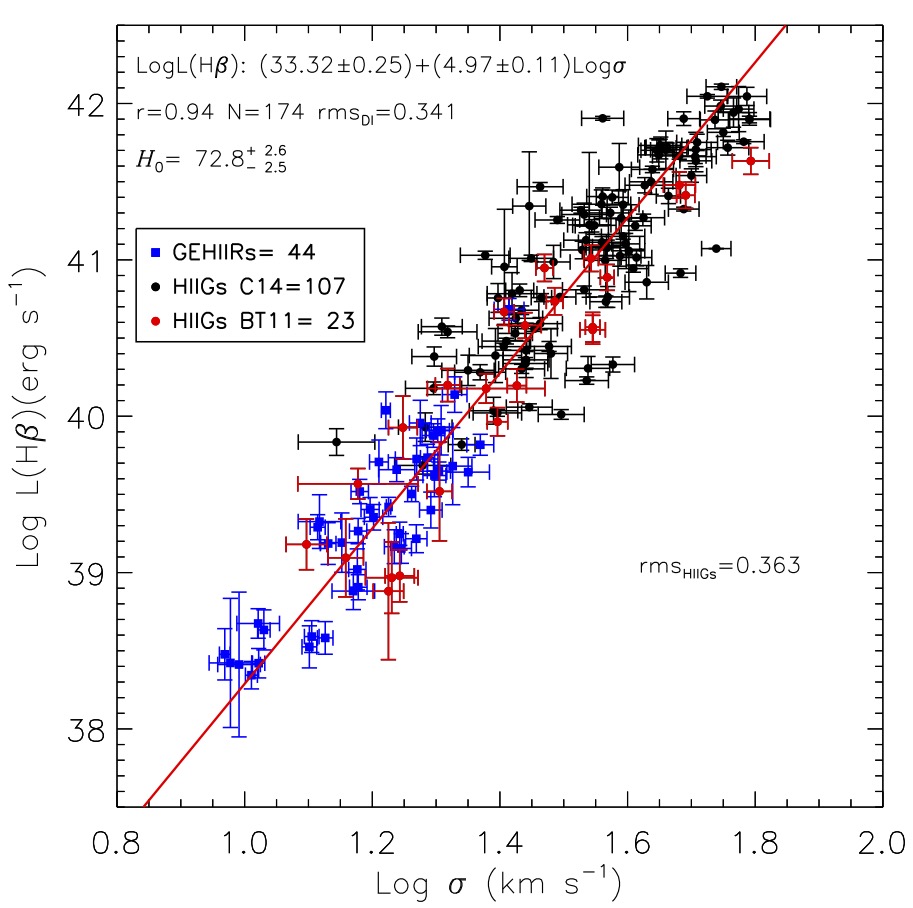
A major thread of my work builds physically grounded distance indicators with explicit uncertainty budgets, enabling robust cosmological constraints from H II galaxies across a wide redshift range.
Inference and validation
I develop Bayesian and hierarchical frameworks that propagate uncertainties from measurements to population trends, with explicit handling of nuisance parameters, selection effects, and systematics.
Survey pipelines
My workflows are Git-versioned, HPC-ready, and designed to scale from student projects to survey-sized catalogs, including cross-matching, validation with mocks, and reproducible publication outputs.
Training and collaboration
I build shared analysis infrastructure and methods training around probabilistic inference, Python, Git, and validation practices, with a strong emphasis on collaborative science.
Selected Publications
Recent work on H II galaxies, cosmological distance scales, and stellar populations.
Key papers from the publication list, with an emphasis on distance indicators, emission-line diagnostics, and survey-driven extragalactic astronomy.
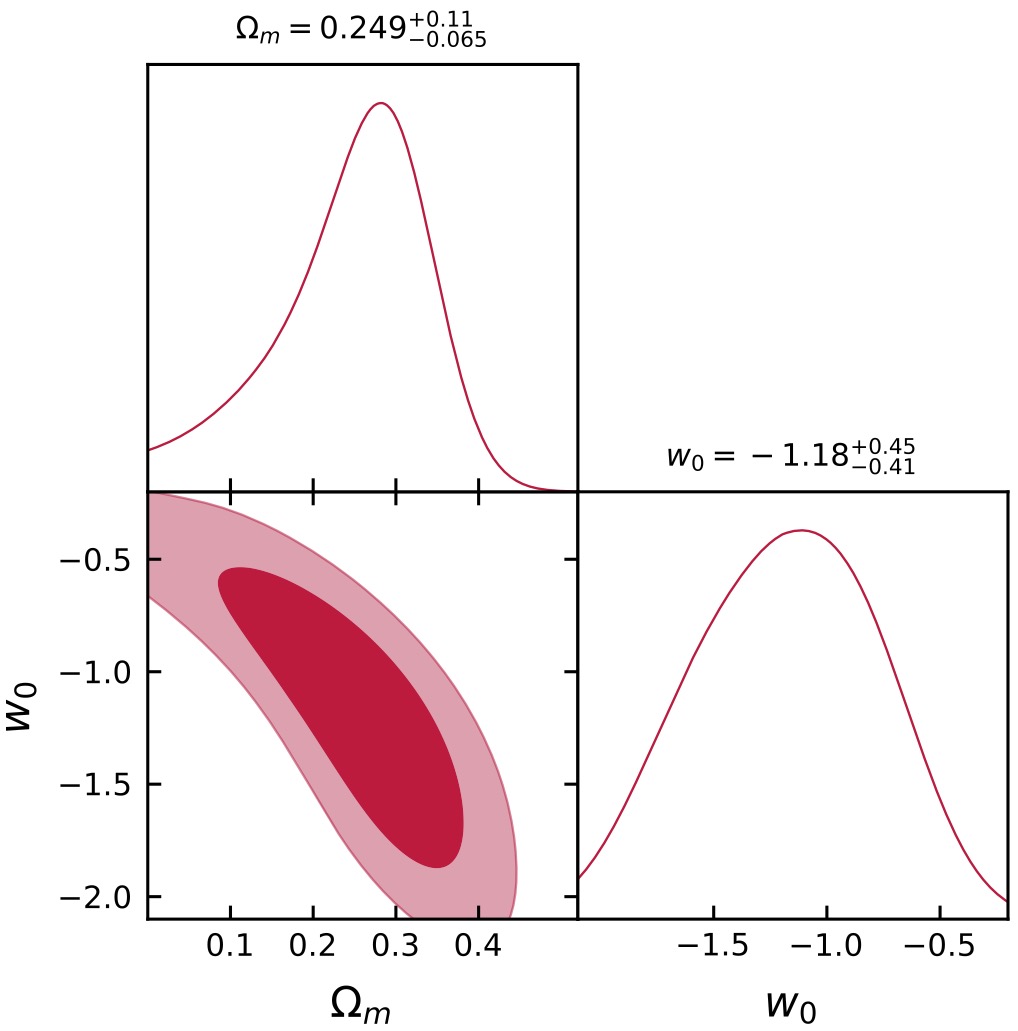
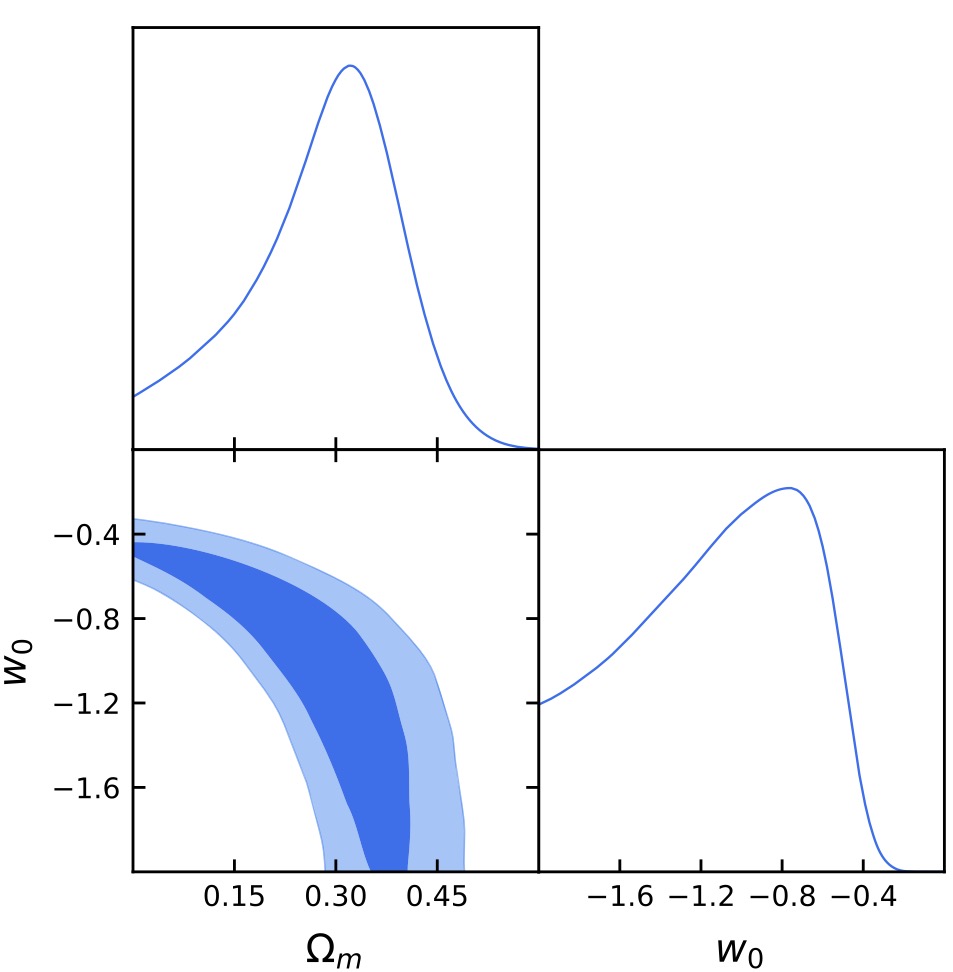
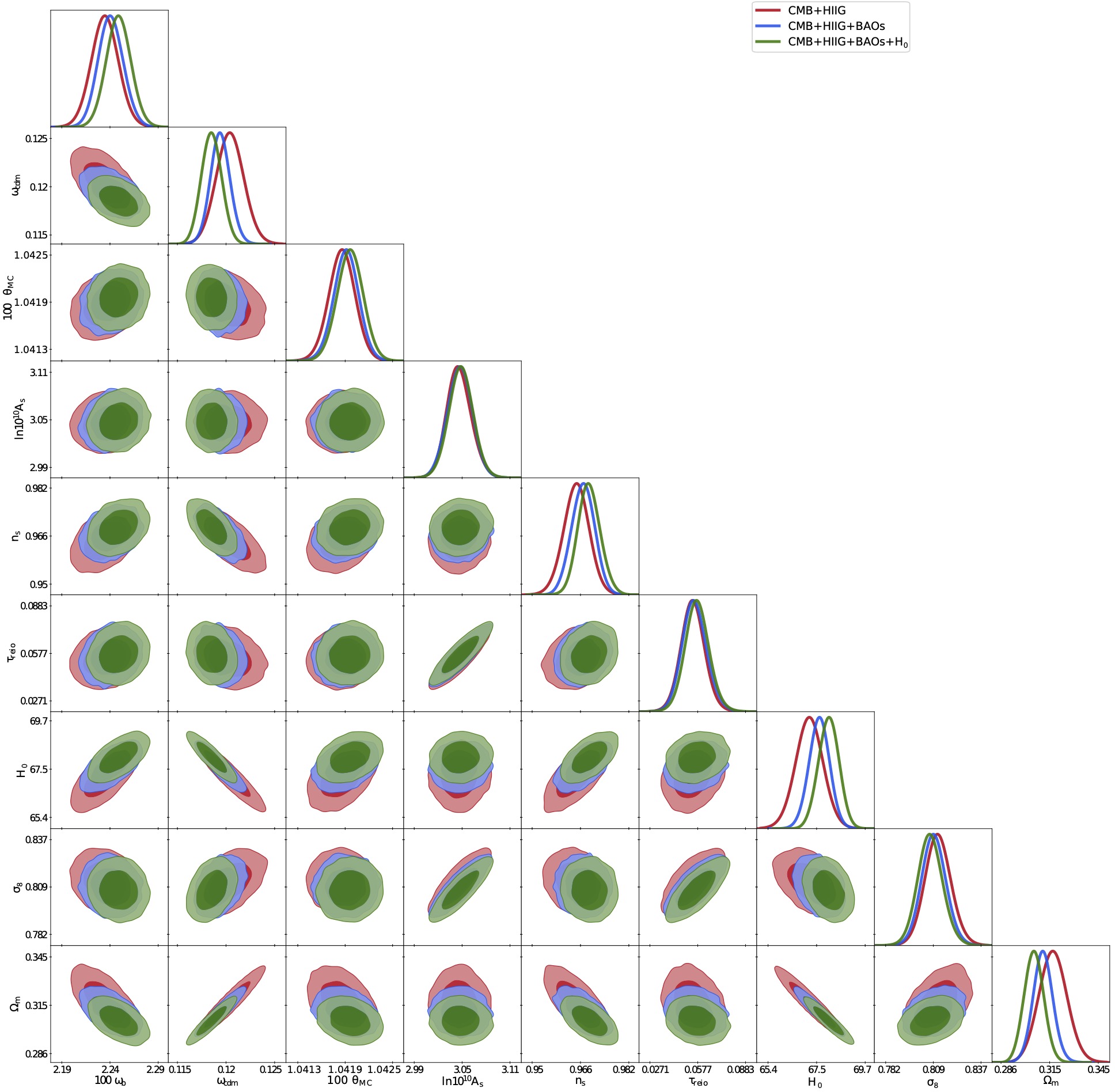
Mapping the Hubble flow from z~0 to z~7.5 with H II Galaxies
A broad-redshift view of the Hubble flow using H II galaxies as a cosmological probe, extending physically grounded distance-indicator work deep into the high-redshift regime.
The Youngest Star Clusters in the Large Magellanic Cloud
A recent study on young stellar populations in the LMC, connecting cluster demographics and stellar population analysis to broader questions of star formation and galaxy evolution.
Experience
Appointments, facilities, computation, and open scientific infrastructure.
My background spans survey collaboration leadership, telescope operations, postdoctoral research, and software development for modern, reproducible astronomical analysis.
Appointments held
2019 - 2025
SECIHTI Research Fellow
Instituto de Radioastronomía y Astrofísica, UNAM, Mexico
2018 - 2019
Postdoctoral Fellow
Instituto de Radioastronomía y Astrofísica, UNAM, Mexico
2016 - 2018
Postdoctoral Fellow
Cavendish Laboratory and Kavli Institute for Cosmology, University of Cambridge
2014 - 2016
Support Astronomer
Gran Telescopio Milimetrico, Mexico
Education
2010 - 2014
PhD in Astrophysics
INAOE, Mexico
2008 - 2010
MSc in Astrophysics
INAOE, Mexico
2003 - 2008
BEng in Mechatronics
Tecnológico Nacional de México
Observational experience
Spectroscopic and IFU reduction, calibration, extraction, kinematics, and emission-line measurements across Subaru/HDS, VLT/X-shooter and KMOS, KCWI, MOSFIRE, GTM/LMT, and 2 m class facilities in Mexico.
Computational tools
Scientific Python, Astropy, pandas, matplotlib, scikit-learn, PyTorch or TensorFlow, JAX, HPC batch workflows, Git, packaging, documentation, and open-source research maintenance.
Selected achievements
Scientific lead of the WEAVE project group in Mexico since 2020, PI on a competitive Frontier Science grant, and a track record of student-ready pipelines with explicit uncertainty budgets.
HIIGS
Open research code for reproducible emission-line galaxy analysis and inference pipelines.
View repositoryh0wsh2023
Didactic material and workflows for hands-on exploration of Hubble-constant inference.
View repositoryArXivPulse
Literature monitoring with AI-assisted ranking tuned to user-defined research priorities.
View repositoryTeaching and Mentoring
Graduate teaching, methods training, and research supervision.
My teaching combines physical intuition with reproducible computational practice, with mentoring centered on probabilistic inference, survey-scale workflows, and publishable student-led projects.
Recent courses
- 2025 Panchromatic Synthetic Observations, Advanced Cosmology
- 2024 Extragalactic Astronomy and Cosmology
- 2023 Stellar Astrophysics
- 2022 Radiative Processes in Astrophysics, Advanced Cosmology, Electromagnetism propaedeutics
- 2021 Radiative Processes in Astrophysics, Stellar Astrophysics
- 2020 Extragalactic Astronomy and Cosmology
- 2019 Radiative Processes in Astrophysics
- 2016 1A Physics supervisions, Selwyn College, Cambridge
Training emphasis
- Probabilistic inference and uncertainty propagation
- Reproducible computational workflows with Python and Git
- Survey-scale data analysis and validation with mocks
- Scientific communication in Spanish and English
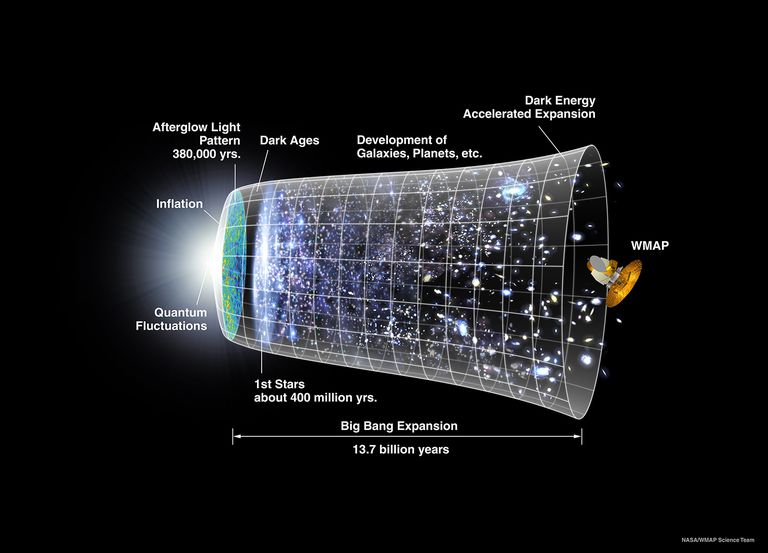
Advanced Cosmology
Graduate-level material on relativistic cosmology, the early Universe, the CMB, and large-scale structure.
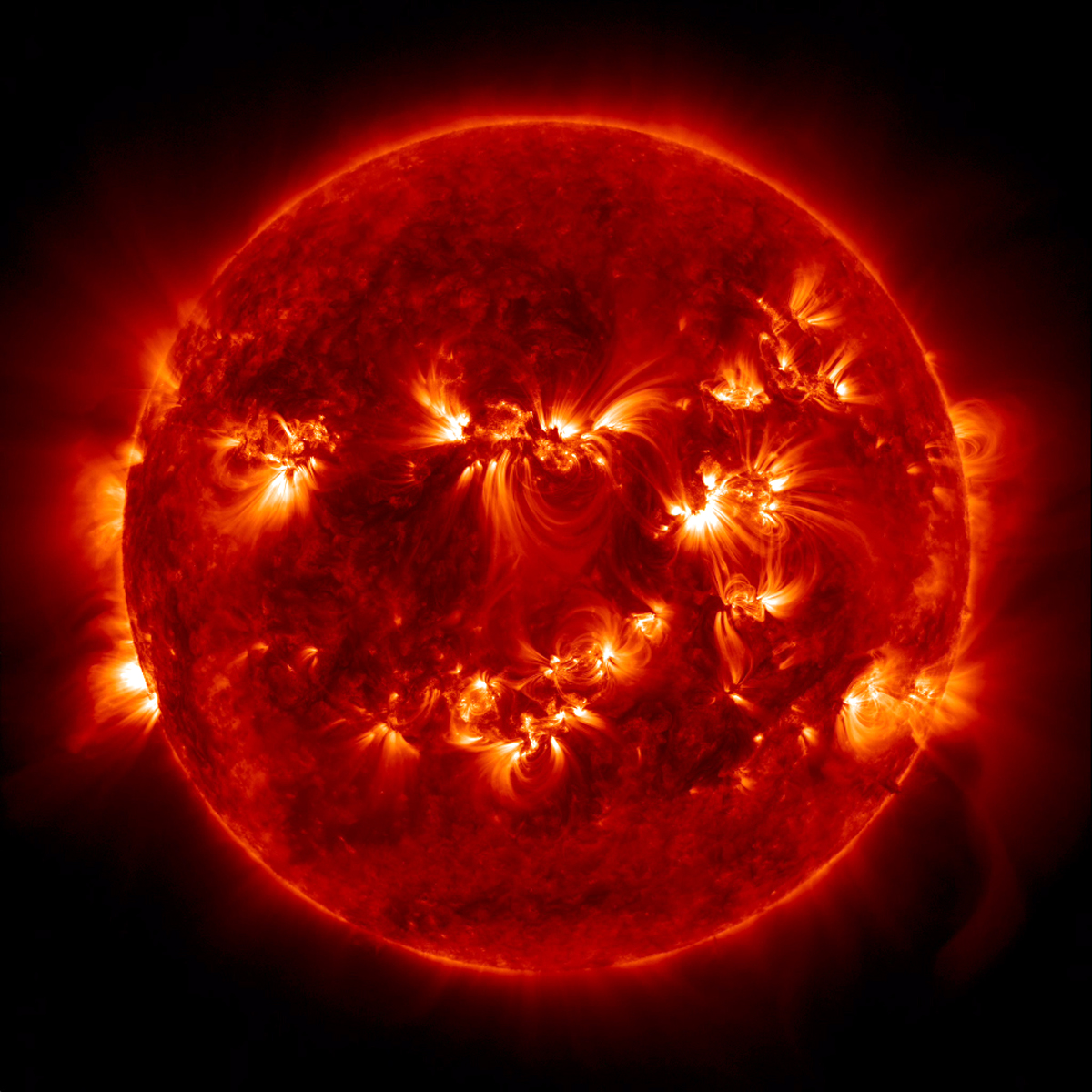
Stellar Astrophysics
Radiation physics, stellar atmospheres, opacity, line formation, and stellar winds for early-stage graduate training.
Leadership, Grants, and Service
Collaborative science, academic citizenship, and community-facing work.
Alongside research and teaching, I contribute through project leadership, workshop organization, mentoring infrastructure, outreach, and service roles inside the astronomy community.
Leadership and service
- Organizer of the Extragalactic Group Meetings at IRyA, UNAM (2020-2025)
- Scientific leader of the WEAVE project group in Mexico (2020-present)
- Member of the Internal Gender Equity Commission at IRyA, UNAM (2020-2022)
- SOC or LOC roles for meetings in Cambridge, INAOE, and national student astronomy events
Grants and collaborations
- PI, CONAHCYT Frontier Science Grant: Exploring the Hubble constant tension (2022-2023)
- ESTALLIDOS collaboration member (2023-present)
- CosmoVerse COST Action member (2023-present)
- WEAVE survey program on local star-forming regions, feedback, kinematics, and metallicity
Honours and memberships
- SNII Level 1 researcher (2020-present)
- Best Doctoral Thesis Award, National Astronomy Conference, Mexico (2017)
- Excellent Graduate Students Prize, Puebla State Government (2012)
- IAU and Sociedad Mexicana de Física active member
Outreach
- Public lectures in Spanish on cosmology and galaxy evolution
- Outreach article on the Hubble constant tension for the UNAM Morelia student community
- Hands-on workshops for astronomy summer schools and introductory courses
- Public online graduate course material produced during remote teaching periods
Contact
Research collaborations, speaking invitations, student supervision, and course inquiries.
The fastest way to reach me is by email. The form below sends a message directly to my inbox and returns you to this section with a delivery status.
Get in touch
- ricardo.chavez.murillo@gmail.com
- Web
- www.inaoep.mx/~ricardoc
- ORCID
- 0000-0003-3031-8784
- GitHub
- blackdragonae
Write a message